

Two card payments fail at checkout. One is refused by the issuer. The other never reaches that decision, because the customer gave up on a verification screen from their bank. In most merchant dashboards they look identical, and the fixes are completely different.
That gap is where authentication lives. The questions merchants actually ask about 3D Secure high-risk payments are about how many customers get challenged, how many finish, and whether any of it improves the payments that go through. This guide covers the buyer’s authentication during a card payment, not the protection of the merchant account, which is covered in the guide to access, 2FA and withdrawal controls on a gateway account.
Quick answer: 3D Secure 2 is a messaging protocol that lets a merchant and a card issuer exchange transaction, cardholder and device data so the issuer can judge whether the buyer is genuine. Strong Customer Authentication is the regulatory requirement, applied in the EEA under PSD2 and in the UK under equivalent rules, that certain electronic payments be verified with two independent factors. 3D Secure is the usual way to meet SCA on cards, but the two are not the same thing, and neither authorises the payment.
What is 3D Secure?
3D Secure verifies the identity of a cardholder during a card-not-present transaction. EMVCo, which maintains the EMV 3-D Secure specification, describes it as technology that helps “payment card issuers and merchants around the world prevent card-not-present (CNP) fraud and increase the security of e-commerce payments” through “the exchange of data, or messages, between the merchant and the issuer to authenticate the consumer”.
The “3-D” refers to the three domains those messages cross: the issuer domain, where the bank decides whether the cardholder is authenticated; the acquirer domain, where the merchant and its gateway start the request and carry the result into the payment message; and the interoperability domain, the scheme infrastructure connecting the two.
The part most teams underestimate is what comes out of it. 3D Secure produces an authentication result. It does not release funds. That distinction is the root of most confusion around 3D Secure high-risk payments.
3D Secure 1 versus 3D Secure 2
3D Secure 1 verified almost everyone the same way; 3D Secure 2 tries to verify most people invisibly. EMVCo lists versions 2.2.0 through 2.3.1.1 as active and recommends 2.2 or higher. Whether any 3D Secure 1 traffic still exists in a given market depends on the scheme, acquirer and region.
| Aspect | 3D Secure 1 | 3D Secure 2 (EMV 3-D Secure) |
|---|---|---|
| Customer experience | Full-page redirect to a separate bank page, often unfamiliar | Authentication embedded in the payment flow, with no visible step in many cases |
| Mobile and in-app support | Built for desktop browsers; native apps handled poorly | Designed for mobile web and native apps through a dedicated SDK |
| Data exchange | Limited transaction data | Richer message set covering transaction, cardholder, device and technical data |
| Frictionless authentication | Not available as a defined flow | Supported: the issuer can authenticate without cardholder interaction |
| Challenge experience | Typically a static password the customer had to remember | One-time passcodes, in-app approval, biometrics and out-of-band methods |
| Risk-based authentication | Minimal; verification applied broadly | Central to the design: the issuer assesses risk before deciding whether to challenge |
What is Strong Customer Authentication?
Strong Customer Authentication (SCA) is a regulatory requirement, not a product. It means verifying a payer with at least two independent elements from three categories, arranged so that compromising one does not compromise the others: knowledge, something only the customer knows; possession, something only they have, such as a registered phone or banking app; and inherence, something they are, such as a fingerprint or face scan.
In the EEA the requirement comes from PSD2, with the detail in the associated regulatory technical standards, which also introduced dynamic linking, tying an authentication to a specific amount and payee. The European Commission’s payment services page records SCA as applying from September 2019, and notes the political agreement of 27 November 2025 on the Payment Services Regulation and PSD3, which has not yet replaced the current rules. As of August 2026, PSD2 remains the framework in force.
The UK runs its own version of the same structure, supervised by the Financial Conduct Authority, with thresholds in sterling. The two are no longer the same legal instrument, and guidance can diverge, so the rules applying to a transaction depend on where the issuer and the acquiring payment service provider are established, not on where the site is hosted. Confirm the position for your own entity and customer base. Nothing here is legal or regulatory advice.
SCA is the obligation; 3D Secure is the mechanism most commonly used to meet it on cards. A payment can use 3D Secure where SCA does not apply, and SCA covers payment types that never touch it.
Authentication and authorisation are not the same decision
- Authentication answers one question: is the person paying the legitimate cardholder? The issuer decides, silently or by challenging.
- Authorisation answers another: will the issuer commit these funds to this merchant now? That weighs available balance, the issuer’s risk scoring, spending patterns, merchant category and scheme-level controls.
Authentication runs first and its result is carried into the authorisation request. A fully authenticated transaction can still be declined, and a decline after a completed challenge is not an authentication failure. If your reporting collapses both into one “failed” bucket, you cannot tell whether to fix the checkout or the processing setup. Separating them is the first step in any serious work on bringing down declines without damaging conversion.
Frictionless and challenge flows
A frictionless flow completes without the customer doing anything extra. EMVCo puts it directly: “In the Frictionless Flow, the Cardholder’s identity is verified automatically by the Issuer without the need for additional authentication steps or Cardholder interaction.”
- The customer submits their card details and confirms the payment.
- The merchant’s integration assembles an authentication request. EMVCo describes the information involved as transaction details such as amount, currency, merchant and whether the payment is recurring, cardholder information, the device used, transaction history with the merchant, and technical information such as device location or IP address.
- The issuer, through its access control server, assesses the request in real time against its own risk model.
- If satisfied, it returns an authenticated result and the customer sees nothing.
- The result is passed into the authorisation request, which the issuer approves or declines separately.
The weighting each issuer applies is proprietary and varies between banks and markets, which is why frictionless rates are worth measuring per issuer, not as one site-wide number.
A challenge appears when the issuer is not satisfied by the data alone, when SCA applies and no exemption was requested or accepted, or when the merchant or acquirer asked for authentication deliberately. It may be a one-time passcode, an approval prompt in the banking app, a biometric check, or on older setups a static password. Friction concentrates in predictable places: codes that arrive late, app switching that loses the session on mobile, and bank screens the customer does not recognise as legitimate.
A higher challenge rate is not the same as a safer checkout. Every challenge is a point where a genuine customer can walk away, and an abandoned challenge produces no fraud statistic at all. It appears only as revenue that never arrived.
SCA exemptions and out-of-scope transactions
The rules define categories where SCA need not be applied. The FCA Handbook chapter on exemptions from strong customer authentication sets out the UK versions; the EEA equivalents sit in the PSD2 technical standards.
- Low-value transactions – in the UK, payments up to £25, with a cumulative limit of £85 since the last authentication or a maximum of five consecutive transactions. The EEA equivalents are €30 and €100 on the same structure.
- Transaction risk analysis – open to a payment service provider whose fraud rate sits at or below the published reference rates, for amounts below the corresponding exemption threshold value, where real-time analysis finds no abnormal pattern.
- Recurring transactions – authentication on the first payment in a series of the same amount to the same payee, with later payments exempt.
- Trusted beneficiaries – authentication when the customer adds or amends the list held by their bank, not on each later payment.
- Secure corporate payment processes – dedicated processes and protocols used by legal persons, where equivalent security levels are met.
- Out of scope – merchant-initiated transactions are generally treated as outside the requirement, although setting up the mandate normally involves authentication. Transactions with one payment service provider outside the EEA or UK are handled on a best-efforts basis, and mail order and telephone order payments fall outside entirely.
Three cautions apply. An exemption is a request, not an entitlement: the issuer can still require authentication and return a soft decline. An exemption is not an approval. And availability depends on your provider, acquirer, issuer, region and transaction type, so verify any blanket claim in writing.
What liability shift actually means
Liability shift is not part of the 3D Secure specification. EMVCo publishes the protocol; the commercial consequences of an authentication result are set by card scheme operating rules and by your acquirer agreement.
Broadly, where a transaction is authenticated through 3D Secure and then approved, liability for certain fraud-related chargebacks may move from the merchant to the issuer. The qualifications matter: scope varies by scheme, region, card product and transaction type; attempted outcomes are treated differently from fully authenticated ones; and the shift applies to fraud reason codes, not disputes generally. It does not cover goods not received, item not as described, cancellation disputes or first-party misuse, so fraud screening, evidence and responsive support still matter. This is not legal advice.
How 3D Secure affects payment approval rates
Turning 3D Secure on does not automatically raise approval rates, and any provider promising it will is describing an outcome they do not control. With 3D Secure high-risk payments the effect runs in both directions, and both directions are worth understanding.
The mechanisms that can help are real. Issuers receive a richer data set and a clear authentication signal to feed their own decisioning, and in markets where SCA applies, unauthenticated card-not-present transactions may be refused outright. The fraud effect is measurable: the EBA and ECB joint Report on Payment Fraud of December 2025, covering data to the end of 2024, found fraud rates for SCA-authenticated card transactions consistently and substantially below those without SCA, and card fraud rates roughly seventeen times higher where the counterpart sat outside the EEA.
The mechanisms that hurt are equally real. Authentication failures, access control server timeouts and browser or SDK incompatibilities produce transactions that never reach an authorisation attempt. Incomplete data pushes issuers towards challenging, abandoned challenges remove the customer entirely, and issuer behaviour varies enough that a change helping one market can be neutral in another. Lower fraud and higher approvals are related but separate outcomes, and authentication is only one input alongside the routing and acquiring setup behind it.
Checkout conversion and how to reduce authentication friction
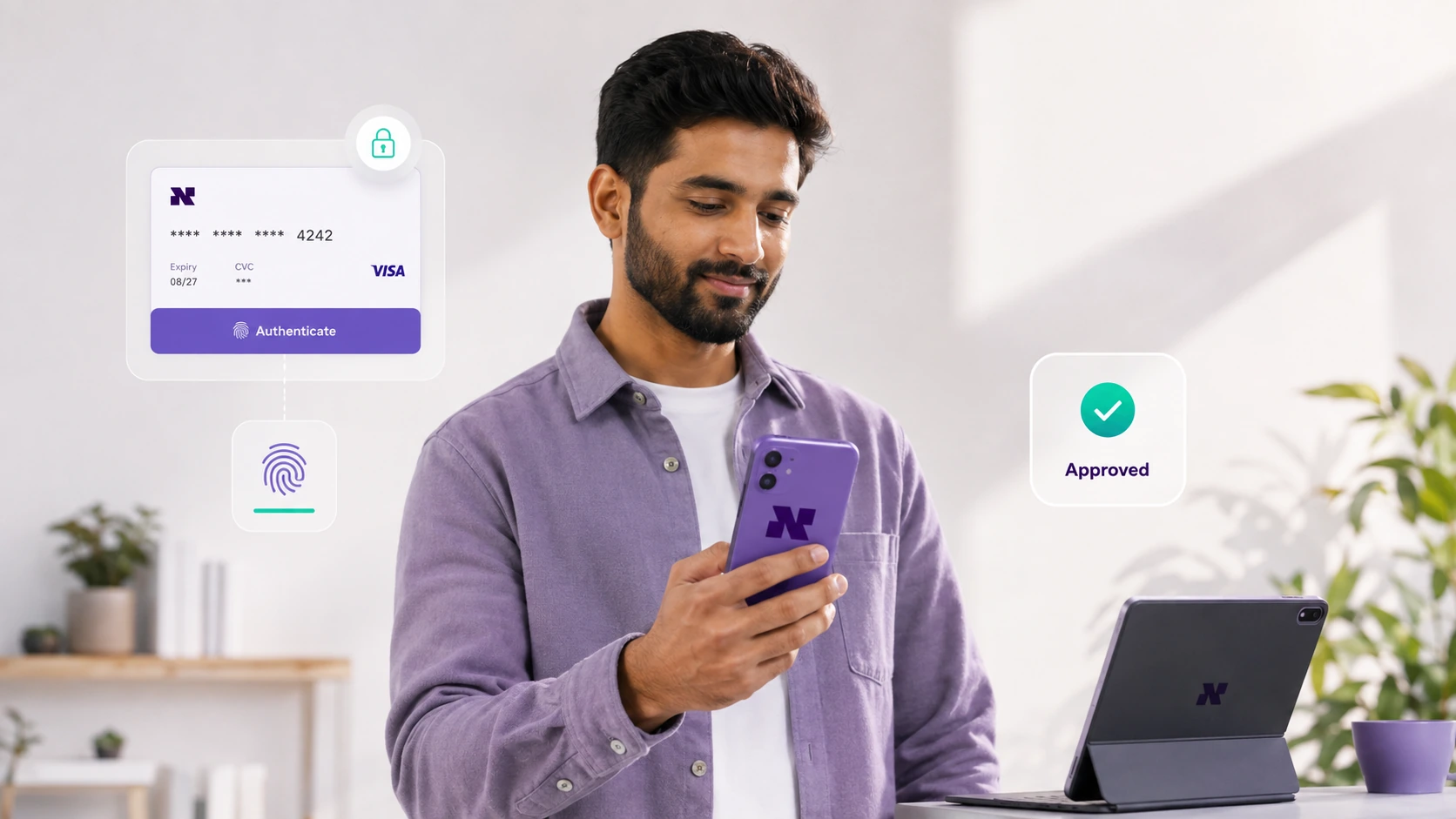
In 3D Secure high-risk payments, conversion effects concentrate in a few measurable places: the frictionless rate, the share of authentications completed with no customer interaction, which is the single most useful number to track; the challenge rate and how many of those challenges are completed; the mobile experience, where app switching and session loss do the most damage; page speed, since a slow challenge window reads as a broken checkout; and device and language compatibility, so challenge screens work on the browsers customers actually use. The broader picture is covered in the guide to checkout conversion in high-risk categories.
Most of the fixable friction sits in a short list. Where it stays concentrated in particular markets despite this work, an additional payment route can help, as covered in the guide to running card and crypto acceptance through one payment layer.
- Send complete and consistent data in the authentication request. Missing optional fields are a common reason issuers fall back to a challenge.
- Reconcile billing, customer and transaction information so name, address, email and phone match what the issuer holds.
- Warn the customer before the challenge appears. A short line explaining that their bank may ask for confirmation reduces the number who assume something broke.
- Test the mobile flow on real devices, including the return into checkout after approving in a banking app.
- Monitor authentication rate, challenge rate and challenge abandonment as standing metrics, not one-off investigations.
- Separate authentication failures from issuer declines in reporting, so the two problems get different owners.
- Break results down by country, issuer, device type and payment method. Averages hide the markets where the problem is.
- Implement retries carefully. Repeating a transaction under identical conditions rarely changes the outcome.
Questions to ask a payment provider
Authentication behaviour rarely comes up in a pricing conversation, so anyone evaluating a provider for 3D Secure high-risk payments has to ask directly.
- Which 3D Secure version and flows are supported, and in which markets?
- How are frictionless and challenge outcomes reported, and at what level of detail?
- Which authentication statuses are exposed through the API?
- Can authentication failures be distinguished from authorisation declines in reporting and webhooks?
- How are exemptions managed, who decides when to request one, and is that configurable?
- Which webhook events cover authentication, and how are they retried?
- How are recurring and merchant-initiated payments treated?
- What reporting is available by market and by issuer?
- What happens when the authentication service is unavailable?
- Which parts of the implementation does the merchant control, and which are fixed by the provider or acquirer?
Ask the same set when changing provider, where authentication behaviour can shift even though nothing visible on the site has. The guide to adding payment infrastructure without rebuilding an existing store covers the wider migration checks.
3D Secure only applies to the card rail, so the authentication questions above belong with the card acceptance setup rather than with crypto or stablecoin flows.
How Niftipay fits into this
Niftipay supports 3D Secure on card payments. Card payments are completed through a hosted payment environment managed using external payment infrastructure, so the protocol version in use and the balance between frictionless and challenge outcomes follow that infrastructure and the acquiring programme confirmed at onboarding, after qualification, KYB and compliance review.
Three points are worth knowing before planning around it:
- The authentication result is visible to the merchant, through the API and in the dashboard. It can be read alongside the payment status rather than inferred from a transaction that simply failed, which is what makes the split between authentication problems and issuer declines workable in practice.
- Authentication fails closed. If the authentication step cannot complete, the transaction does not continue unauthenticated, so unverified card traffic has no path into authorisation.
- SCA exemption decisions sit with the acquirer, which is where the fraud-rate data those exemptions depend on actually lives. If exemption strategy matters at your volumes, that is the conversation to have during setup.
Complete card details are not stored within the Niftipay platform. Card data is handled inside the external payment environment, under its own PCI DSS compliance, and that environment is where the authentication step runs. Anything beyond the points above, including protocol version, expected challenge rates in your markets and how dispute liability is allocated, is worth confirming in writing during qualification alongside pricing and settlement terms.
3D Secure high-risk payments FAQs
Is 3D Secure the same as Strong Customer Authentication?
No. SCA is a regulatory requirement to verify a payer with two independent factors; 3D Secure is a protocol card payments commonly use to meet it. Each can exist without the other.
Does 3D Secure guarantee that a payment will be approved?
No. A transaction can be fully authenticated and then declined for insufficient funds, issuer risk scoring, velocity controls or merchant category reasons.
What is a frictionless 3D Secure flow?
An authentication the issuer completes from the data supplied, without asking the customer to do anything. The payment then continues to authorisation as normal.
Why are some customers asked to complete a challenge?
Because the issuer was not satisfied by the data alone, because SCA applies and no exemption was requested or accepted, or because the merchant or acquirer asked for authentication.
Can 3D Secure reduce chargebacks?
It can reduce exposure to certain fraud-related chargebacks where liability shifts under the applicable scheme rules. It does not affect non-fraud disputes such as goods not received, service quality or cancellation.
Is 3D Secure required for every UK or EEA transaction?
No. The requirement is strong customer authentication, not 3D Secure specifically, and defined exemptions and out-of-scope categories exist. Whether one applies depends on the amount, transaction type and the payment service providers involved.
Can 3D Secure reduce checkout conversion?
Yes, if implemented poorly. High challenge rates, slow challenge windows, weak mobile handling and unclear messaging all cost completed payments.
Authenticate at the right level, not at every opportunity
Handled properly, 3D Secure high-risk payments sit inside a wider strategy covering authentication, fraud control and checkout performance, rather than in a compliance box ticked once at integration. The goal is not to challenge every transaction, nor to avoid challenges entirely, but to apply the level of authentication a transaction warrants and measure what that choice costs, against both compliance and approval data.
Discuss a payment setup designed for complex online businesses if card acceptance, settlement and reporting need to be assessed together rather than one at a time.