
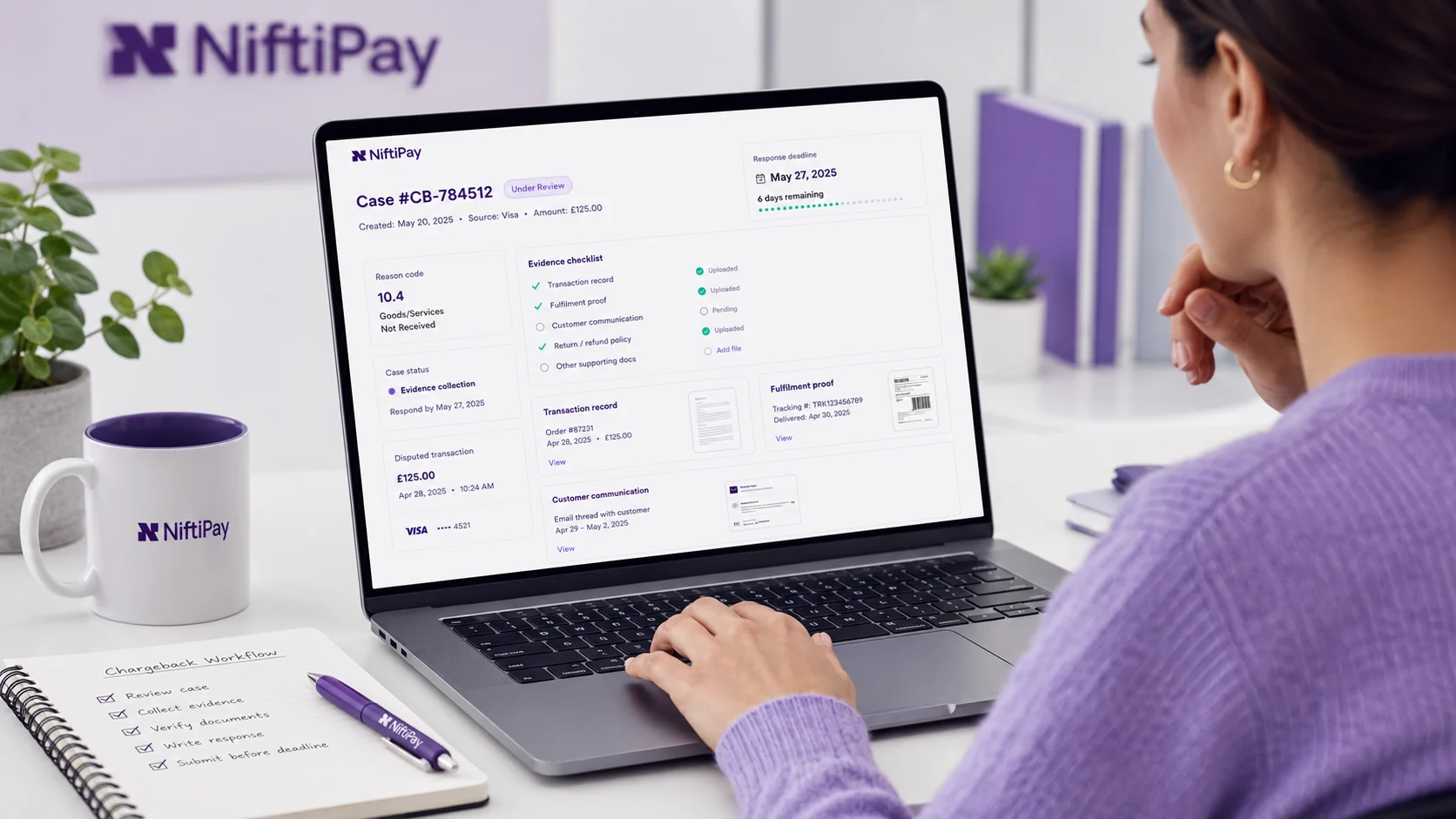
A chargeback notification arrives with three things attached: a reason code, a disputed amount and a response deadline. The next decision is not whether the customer was right or wrong. It is whether the disputed transaction can be defended with relevant, consistent and properly organised evidence. That process is chargeback representment.
Quick answer: Chargeback representment is the process of responding to a cardholder dispute by submitting relevant transaction records and supporting evidence through the applicable acquiring or payment-processing channel. The response must address the specific reason code and meet the deadline shown by the provider. Strong evidence may support the merchant’s case, but it does not guarantee that the disputed funds will be recovered.
What is chargeback representment?
Chargeback representment is the merchant’s formal reply to a dispute already raised against a card transaction. After the cardholder complains to their issuer and the issuer debits the funds, the merchant “re-presents” the transaction with documentation intended to show the charge was valid and the stated reason does not hold.
The merchant does not normally send documents directly to the cardholder’s bank. The response travels through the acquiring bank, the payment processor, a dispute portal or another authorised channel, and the route, accepted formats and internal deadline all vary by provider. Our explainer on the checkout-to-settlement flow covers the path a chargeback later reverses.
Chargeback prevention vs chargeback representment
These are often merged into one budget line, which weakens both. Prevention stops avoidable disputes before they occur. Representment answers a dispute already inside the chargeback process.
| Area | Chargeback prevention | Chargeback representment |
|---|---|---|
| When it happens | Before a dispute is raised | After the chargeback is received |
| Primary objective | Reduce how many disputes occur | Defend one transaction already in dispute |
| Typical actions | Clear descriptors, fraud screening, refund handling | Case review, reason-code analysis, evidence submission |
| Data required | Aggregate dispute trends and fraud signals | One transaction’s authorisation, fulfilment and refund records |
| Teams involved | Marketing, product, support, risk | Finance, operations, support, fulfilment |
| Possible result | A lower dispute ratio over time | Funds returned, or the chargeback upheld |
Neither substitutes for the other. If disputes arrive faster than any response process can absorb, the problem is upstream, and our playbook on how to reduce chargebacks in high-risk industries is the better starting point. This article assumes the chargeback has already been received.
The chargeback representment workflow
Most lost cases are lost on administration, not merit.
1. Receive and log the chargeback
Record the case in one place immediately: transaction and order ID, disputed amount and currency, customer, notification date, response deadline, reason code, payment method, order and refund status, and case owner. A centralised log prevents the two most common failures — a missed deadline, and two people answering the same case inconsistently.
2. Review the reason code
A reason code is the issuer’s classification of the dispute. It defines what the merchant must rebut and therefore what evidence is relevant. Disputes broadly group into: fraud or unauthorised transaction, product or service not received, product not as described, duplicate processing, cancelled recurring payment, credit or refund not processed, and general processing error.
Codes are network-specific: Visa, Mastercard and other schemes use different numbering, and they are never interchangeable — work from the code in your own notification. The Visa Core Rules and Visa Product and Service Rules show how one network categorises them. A perfect delivery record does nothing for a dispute about an unprocessed refund.
3. Decide whether the case is defensible
Not every dispute is friendly fraud. A claim may be legitimate, accidental, fraudulent, caused by customer confusion or fulfilment, or the result of a merchant-side error. Assess honestly before spending time:
- Was the transaction properly authorised, and can the customer be linked to the order?
- Was the product delivered, or the service accessed?
- Was any cancellation handled correctly, and was a refund already issued?
- Did the business follow its own policies, and were the terms visible and accepted at purchase?
- Does the evidence actually address the reason code?
- Is there time to respond, and is the amount worth the operational cost?
4. Build the evidence package
More documents do not make a stronger response. Gather what is relevant to the reason code, then order it chronologically behind a short case summary, with clear file names. One contradictory record can undermine an otherwise solid case, and an unsorted dump is less persuasive than a brief response answering one question directly. Have someone other than the preparer review it.
5. Submit before the deadline
Follow the date shown in your notification or dispute portal, set an internal cut-off earlier, and keep the submission confirmation. Avoid last-minute filing — a portal error at the deadline leaves no room to recover.
6. Track the outcome
Possible results: the response accepted, the chargeback upheld, funds returned provisionally or finally, a request for further information, an additional stage such as pre-arbitration, or the case closed without recovery. Stages vary by network, issuer, acquirer and arrangement. Track results by reason code — otherwise the same disputes keep arriving.
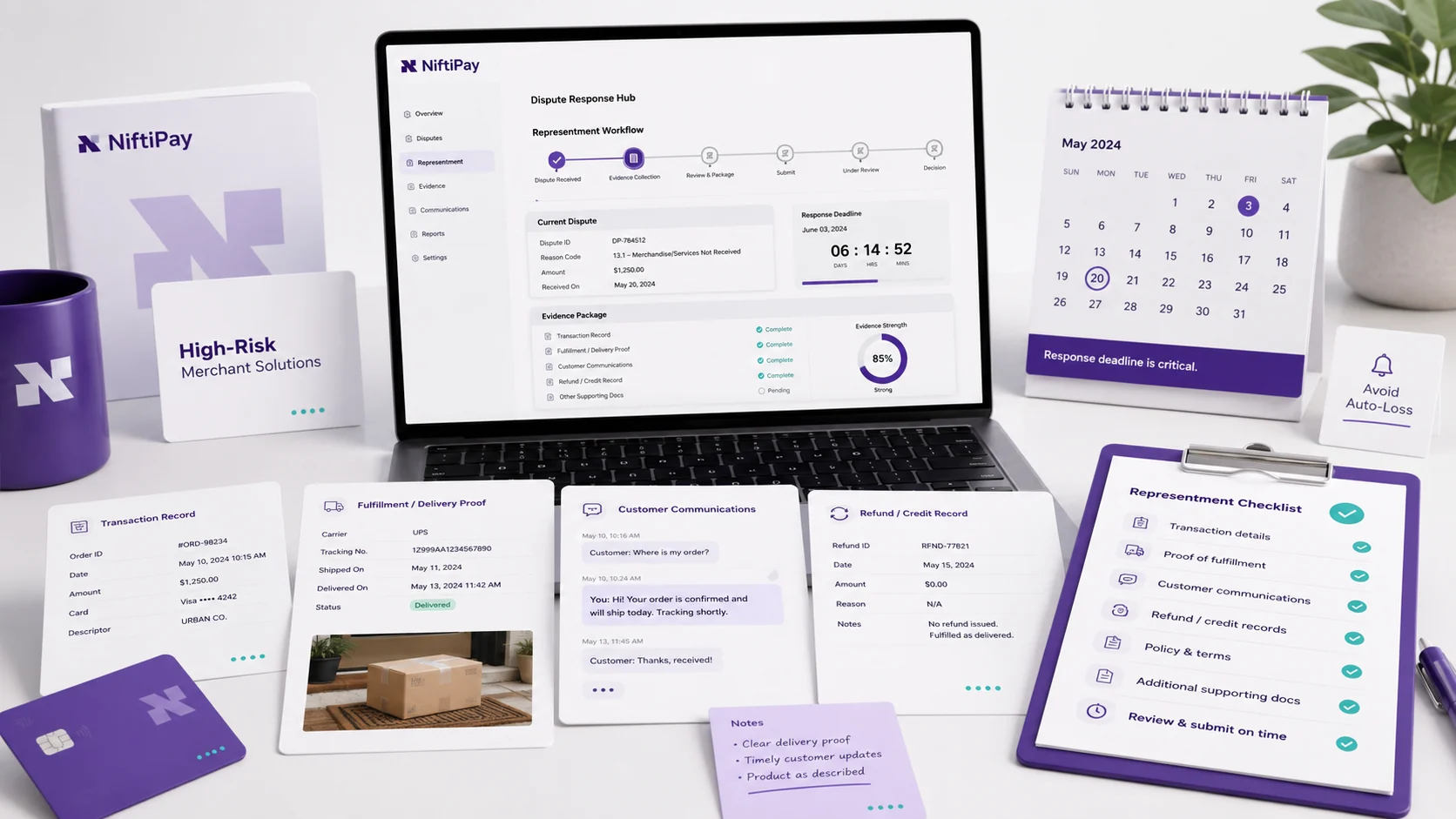
What evidence can support a chargeback response?
Transaction and payment records
Transaction ID, date and time, amount and currency, payment status, authorisation result, billing information, order reference, authentication data where available, device or IP information where lawfully collected, and previous successful transactions with the same customer.
Programmatic access to current payment status information speeds this up, though whether any given API also exposes dispute records is a question for your provider. Where a transaction was authenticated, those records may be relevant to disputes alleging the cardholder did not authorise the payment — see EMVCo’s 3-D Secure specifications.
Delivery and fulfilment evidence
For physical goods: shipping record, carrier, tracking number, delivery confirmation and address, recipient name, signature where available, and delivery date. For digital products and services: account creation, login and download records, service activation, usage logs, booking attendance and access timestamps.
No single category guarantees a win. Fulfilment proof is strong against a “not received” claim and largely irrelevant to a duplicate-processing dispute.
Customer communication
Order confirmations, support messages, shipping updates, acknowledgements, cancellation requests and documented attempts to resolve the issue establish what the customer knew and when. Submit these as they exist — editing or presenting exchanges misleadingly is not defensible and tends to be self-defeating.
Terms, policies and customer acceptance
Refund and cancellation policies, subscription terms, product description, stated shipping times, the checkout acceptance record and the terms displayed at purchase. A published policy is not automatically persuasive: it carries little weight if it was not visible, was not accepted, was applied inconsistently, or conflicts with how the business actually behaved.
Refund and credit records
Check whether a refund was already issued — the amount, date, payment reference, whether it was full or partial, and whether the credit reached the original payment method. Contesting an amount already correctly refunded wastes the response entirely.
How chargeback response deadlines work
There is no universal response window. Deadlines vary by card network, reason code, issuer, acquirer, processor, dispute platform and processing agreement. Treat any single figure quoted online with caution and work from your own notification.
Three points hold consistently. The deadline shown by your processor may be earlier than the network’s final date, because the provider needs time to forward the response. Missing it may remove the opportunity to respond at all, however strong the case. And internal deadlines should sit earlier than the external one. Visa’s overview of rules and fees for small businesses is a useful starting point, but the operative dates are in your own notification.
How high-risk merchants can organise the process
Most of the gain comes from structure rather than argument quality: a centralised dispute log, a named case owner, evidence templates by category, integration with order records, internal deadlines ahead of the external one, and coordination between finance, support and fulfilment. Avoid the two habits that quietly cost money — one template for every dispute, and treating every case as fraud. Both produce evidence that does not match the allegation.
Access deserves attention, since dispute work touches transaction data, customer communications and refund controls. The access controls protecting payment operations should cover who can view records and who can authorise a refund.
Questions to ask a payment provider about chargebacks
Ask these during qualification, not after the first dispute:
- How will we be notified about a new chargeback, and where are the reason code and deadline displayed?
- Which transaction records are available to us, and can they be exported?
- Can evidence be uploaded through the platform, and who submits it to the acquiring bank?
- Are there chargeback or representment fees?
- Can the outcome be tracked, and is support available for additional dispute stages?
- How are refunds reflected in the dispute record?
The answers depend on the acquiring and processing arrangement behind the account, which is why the structure of a high-risk merchant account is worth understanding before signing. Costs belong in the same conversation — our breakdown of high-risk payment processing fees covers where chargeback fees appear.
When it may not make sense to dispute a chargeback
Responding to everything is not a strategy. Accepting the chargeback may be better when the claim is valid, the merchant failed to deliver, a promised refund was never processed, the records are incomplete, the evidence does not address the reason code, the deadline has passed, or a full refund was already completed.
Commercial judgement matters too. If the disputed amount is lower than the cost of responding, pursuing it is a net loss. If the terms were unclear or misleading, or the transaction breached the merchant’s own policy, a contested case may expose a larger operational problem better fixed than argued. These are commercial decisions, not legal advice.
Chargeback information and Niftipay
Niftipay supports card, crypto and stablecoin acceptance for high-risk and non-standard online businesses, with pricing and terms assessed individually during review. On disputes specifically, the confirmed position is narrow: chargebacks may involve a variable penalty, depending on the applicable merchant arrangement. Refunds are generally processed within approximately 48 hours.
Beyond that, the exact chargeback response process depends on the merchant’s processing and acquiring arrangement. Merchants should confirm during qualification how they are notified of a new dispute, which transaction records they can access, where and how evidence is submitted, who forwards it to the acquiring bank, and what chargeback-related costs apply.
Chargeback representment FAQs
What is chargeback representment?
It is the merchant’s formal response to a card dispute already raised. The merchant re-presents the transaction with records and evidence intended to show the charge was valid, submitted through the acquiring bank, processor or dispute channel that applies to their account. It happens after the chargeback, not before.
Is chargeback representment the same as chargeback prevention?
No. Prevention aims to stop avoidable disputes before they occur, through clearer billing descriptors, fraud screening and correct refund handling. Representment answers a dispute already inside the chargeback process. They use different data, involve different teams and produce different outcomes.
What evidence is needed to dispute a chargeback?
It depends on the reason code. Commonly relevant material includes transaction and authorisation records, delivery or service-access evidence, customer communication, the terms accepted at purchase, and refund records. The test is relevance rather than volume: evidence must address the specific allegation and stay consistent.
How long does a merchant have to respond to a chargeback?
There is no universal deadline. Response windows vary by card network, reason code, issuer, acquirer, processor and processing agreement, and the date shown by your provider may be earlier than the network’s final date. Work from the deadline in your own notification, and set an internal cut-off before it.
Can a merchant win every chargeback dispute?
No. Some disputes are valid, some records are incomplete, and some cases cannot be defended regardless of preparation. Strong, relevant evidence may support the merchant’s case, but no evidence guarantees recovery of the disputed funds. Treating representment as a guaranteed recovery channel wastes effort on cases that should be accepted.
Review your high-risk payment setup
Chargeback representment is one part of managing payment risk. High-risk merchants also need clear transaction records, reliable payment-status information and a defined process for refunds and disputes — decided before the first chargeback arrives, not during it.
Niftipay can review your business model, payment requirements and available processing setup during qualification. Get Started to confirm which terms, records and dispute arrangements would apply to your account.