
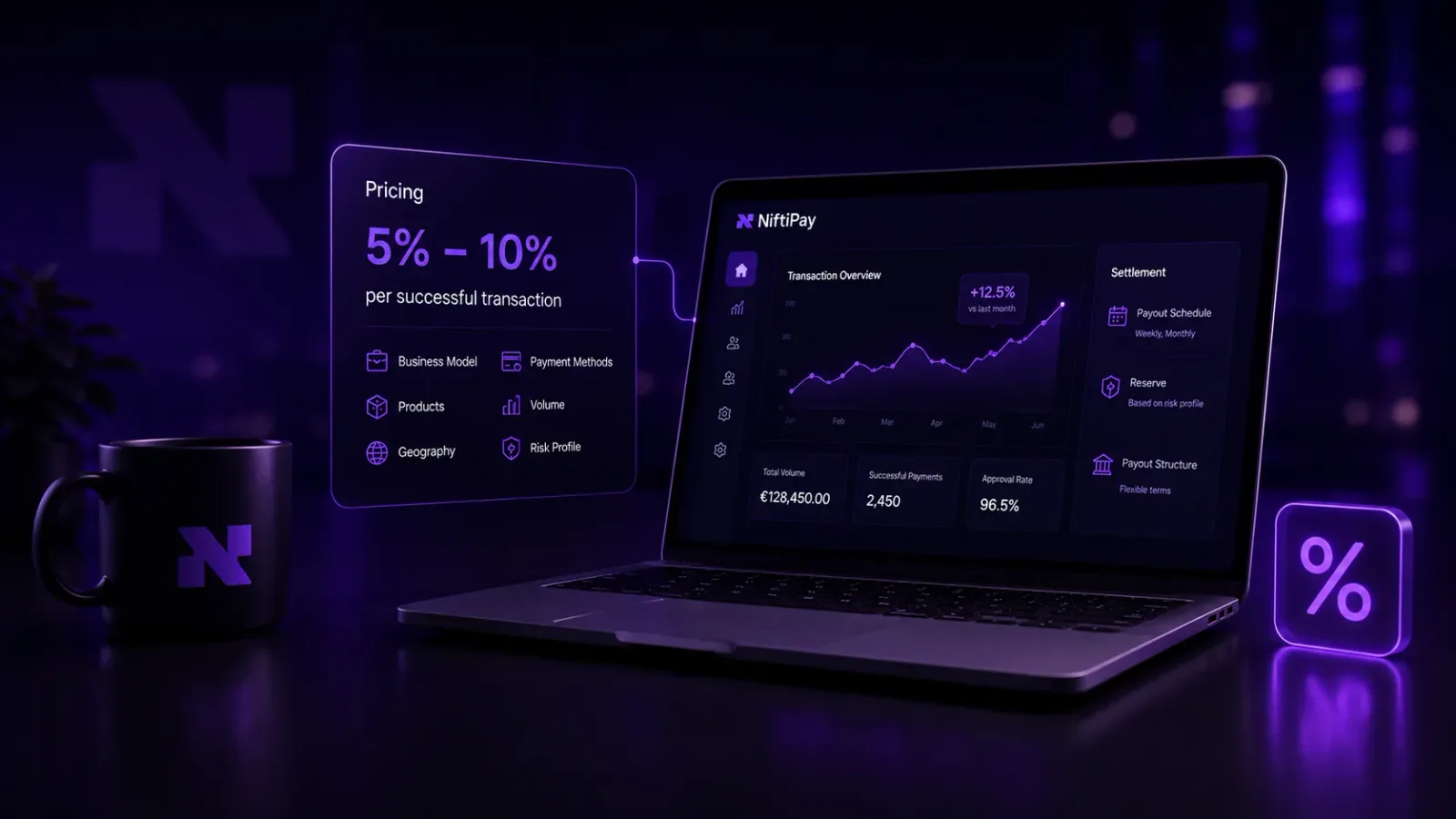
Most merchants ask for one number, but high-risk payment gateway pricing is rarely a single flat rate. What you pay per transaction is shaped by your business model, product category, target markets, payment methods and settlement requirements — not just by how much you process. This guide explains what actually moves the price, so you understand your quote before you request one.
If you run a business that traditional acquirers treat as high-risk, standard flat-rate pricing from a mainstream provider usually will not apply. Pricing is built around the risk and operational work involved in supporting your account, which is why two merchants in the same sector can be quoted very differently.
Why high-risk payment gateway pricing varies
Mainstream processors publish fixed rates because they serve low-risk, high-volume merchants with predictable behaviour. High-risk accounts do not fit that model. The provider is pricing exposure: the chance of chargebacks, refunds, fraud, regulatory scrutiny and the cost of holding funds against those risks.
Several factors push a rate up or down at the same time:
- Risk exposure — the likelihood of disputes, fraud and losses in your sector.
- Chargeback and refund history — past ratios signal future cost.
- Compliance checks — the ongoing KYB, AML and monitoring your account needs.
- Payout timing — faster settlement and lower reserves cost more to offer.
- Payment method mix — card, crypto and stablecoin rails each carry different economics.
- Technical setup — a plug-in checkout is cheaper to support than a complex custom integration.
Because these move independently, payment gateway fees high risk merchants pay are best understood as a custom quote, not a rate card.
Typical high-risk payment gateway pricing range
As a general benchmark, pricing typically ranges from 5% to 10% per successful transaction. That range is an orientation, not a final quote — where a specific merchant lands depends on the full profile of the business.
Two businesses processing identical monthly volume can sit at opposite ends of that band. A clean compliance record, a lower-risk product mix and a simple integration pull the rate down; a high dispute history, restricted markets or complex payout needs push it up. Treat any figure you see online as indicative until it is matched to your actual operation.
What affects transaction rates
Underwriters weigh several inputs together to set your payment gateway transaction rates. No single factor decides the number; they interact. Here is what each one contributes.
Business model
How you take payment matters. One-off sales, subscriptions, deposits, pre-orders and marketplace flows each carry different refund and dispute patterns, and that pattern feeds directly into the rate.
Product category
Some categories attract more fraud, more chargebacks or more regulatory attention than others. Higher operational and compliance overhead is reflected in high-risk payment processor fees for that vertical.
Geography and target markets
Where your company is based, where you sell and where your customers pay from all affect pricing. Cross-border processing, local acquiring and regional card scheme costs vary, and restricted or higher-risk regions typically raise the rate.
Payment methods
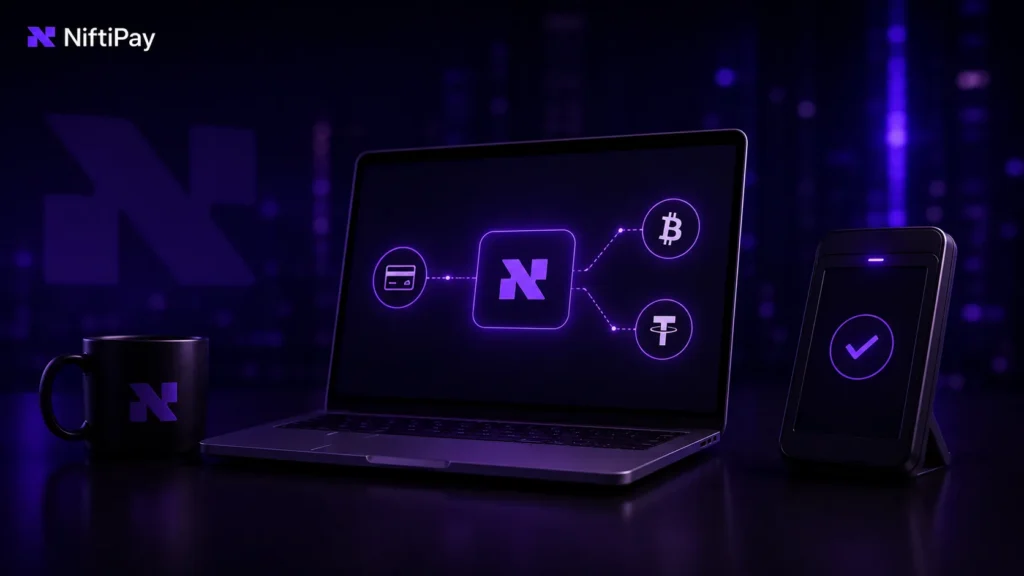
The rails you accept change the economics. Card payments, crypto payments, stablecoin settlement and mixed checkout flows each price differently, and supporting several methods through one layer carries its own setup. If you are weighing options, our guide to the high-risk WooCommerce payment gateway covers how method choice shapes a real checkout.
Expected monthly volume
Volume still matters — it just is not the whole story. Higher, steady processing can support a more competitive rate, while unpredictable or seasonal volume is harder to price. Volume adjusts the number; it does not set it alone.
Risk profile and compliance history
Your chargeback ratio, refund rate, fraud exposure and any prior account terminations form your risk profile. A stronger history supports better merchant account pricing; a troubled one narrows your options and lifts the rate.
Implementation needs
A hosted checkout, a plug-in and a bespoke API integration involve very different amounts of engineering and support. More complex implementation and ongoing technical requirements are factored into the price.
Why business model and product category matter
Different industries carry different levels of operational, legal, fraud and chargeback risk, and pricing follows that reality. A business with long fulfilment times, recurring billing or high average order values behaves differently from one selling low-value one-off items, and each pattern changes the likelihood and cost of disputes.
This is why a provider asks detailed questions about what you sell and how you sell it before quoting. The aim is to price your actual exposure rather than apply a blanket sector rate, and reducing friction at the checkout without weakening controls — as we cover in high-risk checkout conversion — can improve the profile a rate is built on.
How geography and payment methods influence pricing
Pricing can shift depending on where you operate, where your customers are located and how they choose to pay. Selling into multiple regions introduces different acquiring costs, currency handling and local scheme fees, and each added market can change the rate.
Payment method choice compounds this. Whether you need card payments, crypto payments, stablecoins or a mixed checkout affects both the processing cost and the settlement path. Card economics are partly driven by interchange fees set by the schemes, while crypto and stablecoin rails settle on different terms entirely.
Settlement requirements and payout structure
Settlement requirements are a core part of any high-risk quote, not an afterthought. How and when you receive funds — daily, weekly or on a custom schedule — is priced alongside the transaction rate, because faster access to money increases the provider’s exposure.
Three levers usually appear in the terms:
- Payout schedule — the frequency at which settled funds are released to you.
- Rolling reserve — a percentage held for a set period to cover future chargebacks or refunds.
- Reserve and hold logic — adjusted to your risk profile, so higher-risk accounts see larger or longer holds.
A merchant with a strong history might secure shorter holds and more frequent payouts; a newer or higher-risk account may start with a reserve that eases over time. To see where settlement sits in the wider flow, our breakdown of the checkout to settlement flow maps each stage from payment to payout.
Rolling reserves and why they matter
One of the most misunderstood parts of high-risk payment processing fees is the role of rolling reserves.
A rolling reserve is a percentage of each transaction that is temporarily held by the provider to cover potential chargebacks or disputes. This directly impacts cash flow, even if it is not always presented as a “fee.”
If you are not familiar with how this works, our guide on rolling reserves for high-risk merchants explains how reserves are calculated and how they affect your business over time.
Understanding reserves is essential because they often represent a larger financial impact than the visible transaction rate.
Hidden costs most merchants overlook
Many businesses focus on headline pricing and miss the smaller costs that accumulate over time.
Common hidden elements include:
Chargeback handling fees
Each dispute can carry a fixed cost, regardless of the outcome.
Currency conversion margins
Cross-border transactions may include additional percentage costs.
Settlement delays or payout structures
Slower access to funds can impact liquidity.
Setup or onboarding costs
Some providers include additional fees during the onboarding process.
Platform or maintenance fees
Recurring costs that are not always highlighted upfront.
This is where understanding the full structure of high-risk payment processing fees becomes critical. A provider that appears cheaper at first glance may become more expensive in practice.
Pricing looks different again when card acquiring and crypto settlement run side by side — compared in our guide to card acquiring and crypto settlement — and the crypto side has its own components, set out in crypto payment processor fees.
What merchants should prepare before requesting pricing
A faster, more accurate quote starts with a complete picture of your business. Prepare these before you get in touch:
- Business model and clear details of your products or services.
- Target countries where you sell and where customers pay from.
- Expected monthly volume and how steady or seasonal it is.
- Average order value across your typical transactions.
- Preferred payment methods — card, crypto, stablecoin or a mix.
- Chargeback or refund history, if you have processed before.
- Settlement expectations — payout frequency and reserve tolerance.
- Existing website, platform or integration needs.
- Compliance and KYB documentation for onboarding.
The more precise this information, the closer an initial quote will be to your final terms — and the fewer rounds of back-and-forth before you go live.
How Niftipay structures high-risk pricing
Niftipay prices around your operating model rather than forcing you into a fixed tier. Card, crypto and stablecoin payments run through one structured layer, and the rate, settlement terms and payout structure are built from the same inputs covered above: business model, products, geography, payment methods, expected volume, risk profile, settlement requirements and implementation needs. Our guide to payment settlement and merchant payout terms sets out the settlement schedule, reserve and payout thresholds that sit alongside the rate.
That approach will not promise instant approval or a headline rate before anyone has seen your business — and that is the point. A quote that reflects how you actually operate is one you can plan around, rather than a number that changes the moment underwriting begins. Come to the conversation with the checklist above, and the pricing you receive will be grounded in your real risk and requirements from the first exchange.
High-risk payment gateway pricing FAQs
How much does a high-risk payment gateway cost?
Pricing typically ranges from 5% to 10% per successful transaction, but that band is a benchmark rather than a quote. Your final rate depends on your business model, product category, target markets, payment methods, expected volume, risk profile, settlement requirements and integration needs.
Why is high-risk pricing higher than standard flat-rate fees?
High-risk accounts carry more chargeback, fraud and regulatory exposure than mainstream merchants, and the provider prices that exposure plus the cost of ongoing compliance and holding funds in reserve. Flat-rate pricing works for predictable, low-risk volume; a custom rate reflects the real work of supporting a high-risk account.
Does my monthly volume set the rate on its own?
No. Volume is one input among several. Higher, steady processing can support a more competitive rate, but a strong compliance history, a lower-risk product mix and a simple integration often move the number more than volume alone.
What is a rolling reserve and will I need one?
A rolling reserve is a percentage of your takings held for a set period to cover potential chargebacks or refunds. Whether one applies, and how large it is, depends on your risk profile. A stronger history can mean smaller or shorter reserves, while newer or higher-risk accounts may start with a reserve that eases over time.
Can I accept card, crypto and stablecoin payments under one setup?
Yes. Niftipay runs card, crypto and stablecoin payments through one structured layer, so you can offer a mixed checkout without stitching together separate providers. The exact method mix influences both your processing cost and your settlement path.
What do I need to prepare to get a pricing quote?
Have your business model and product details, target countries, expected monthly volume, average order value, preferred payment methods, any chargeback or refund history, settlement expectations, integration needs and KYB documentation ready. The more complete this picture, the closer an initial quote will be to your final terms.