
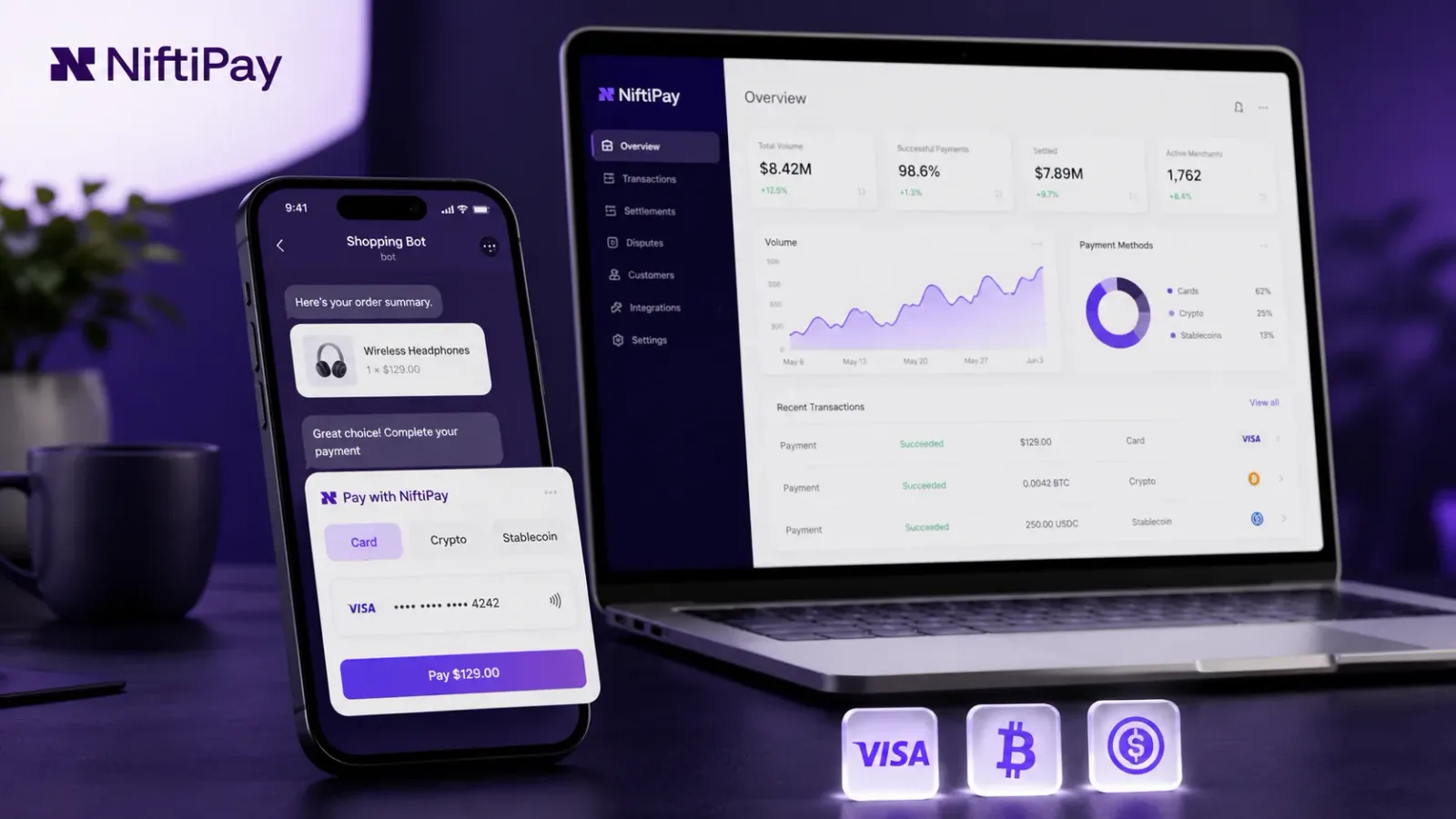
Bot-based commerce is growing as merchants sell through conversational, private and automated channels rather than a single public storefront. A bot payment gateway is the layer that lets those vendors accept and settle real money — cards, crypto and stablecoins — without forcing every sale through a checkout that was never built for the way they trade. The front end can change; the payment infrastructure still has to be secure, flexible and reliable.
Bot-driven sales flows tend to move quickly and sit outside conventional ecommerce templates. That puts more weight on the payment layer. It has to confirm transactions promptly, support more than one payment method, and give the operator clean visibility over settlement and payouts.
What is a bot payment gateway?
A bot payment gateway is a payment layer that lets bot-based vendors accept and process payments without depending on a traditional ecommerce checkout alone. Instead of assuming every customer arrives on a web shop, it exposes payment links, hosted checkout pages or API calls that a bot flow can trigger at the moment a buyer is ready to pay.
The gateway handles the parts that do not change regardless of channel: authorising the payment, confirming it, applying risk checks, and settling funds to the merchant. The bot handles the conversation; the gateway handles the money. Keeping those responsibilities separate is what makes a bot-based sales flow auditable and reliable.
Why bot-based commerce needs specialised payment infrastructure
Selling through bots changes the shape of a transaction. The buyer may never see a standard cart page, the payment request may be generated on demand, and confirmation often needs to feed straight back into the flow so the bot can release goods or access. General-purpose checkouts are not designed for that. The same mechanics applied to one specific channel — bot checkout, webhooks and settlement inside a chat app — are covered in Telegram payment gateway.
Specialised payment infrastructure addresses a few recurring needs for these vendors:
- Embedded and on-demand flows — payment requests created at the point of sale, not tied to a fixed storefront URL.
- Fast confirmation — a clear, machine-readable signal that a payment has cleared so the flow can continue without manual checks.
- Flexible payment methods — cards, crypto and stablecoins offered side by side rather than through separate, disconnected tools.
- Support for complex or high-risk sectors — underwriting and risk controls that account for the categories bot-based vendors often operate in.
- Clean settlement — predictable movement of funds from customer payment to merchant payout.
Cards, crypto and stablecoins in one payment flow
Buyers in bot-based channels do not all pay the same way. Some expect to tap a card; others hold crypto; a growing number prefer stablecoin payments for their predictability against fiat. Forcing everyone down one rail loses sales.
The practical value is offering these methods without fragmenting operations. Running a card acquirer, a crypto processor and a stablecoin tool as three separate systems means three dashboards, three reconciliation jobs and three sets of payout logic. A single card and crypto payment gateway consolidates acceptance, status reporting and settlement so the vendor manages one flow instead of three.
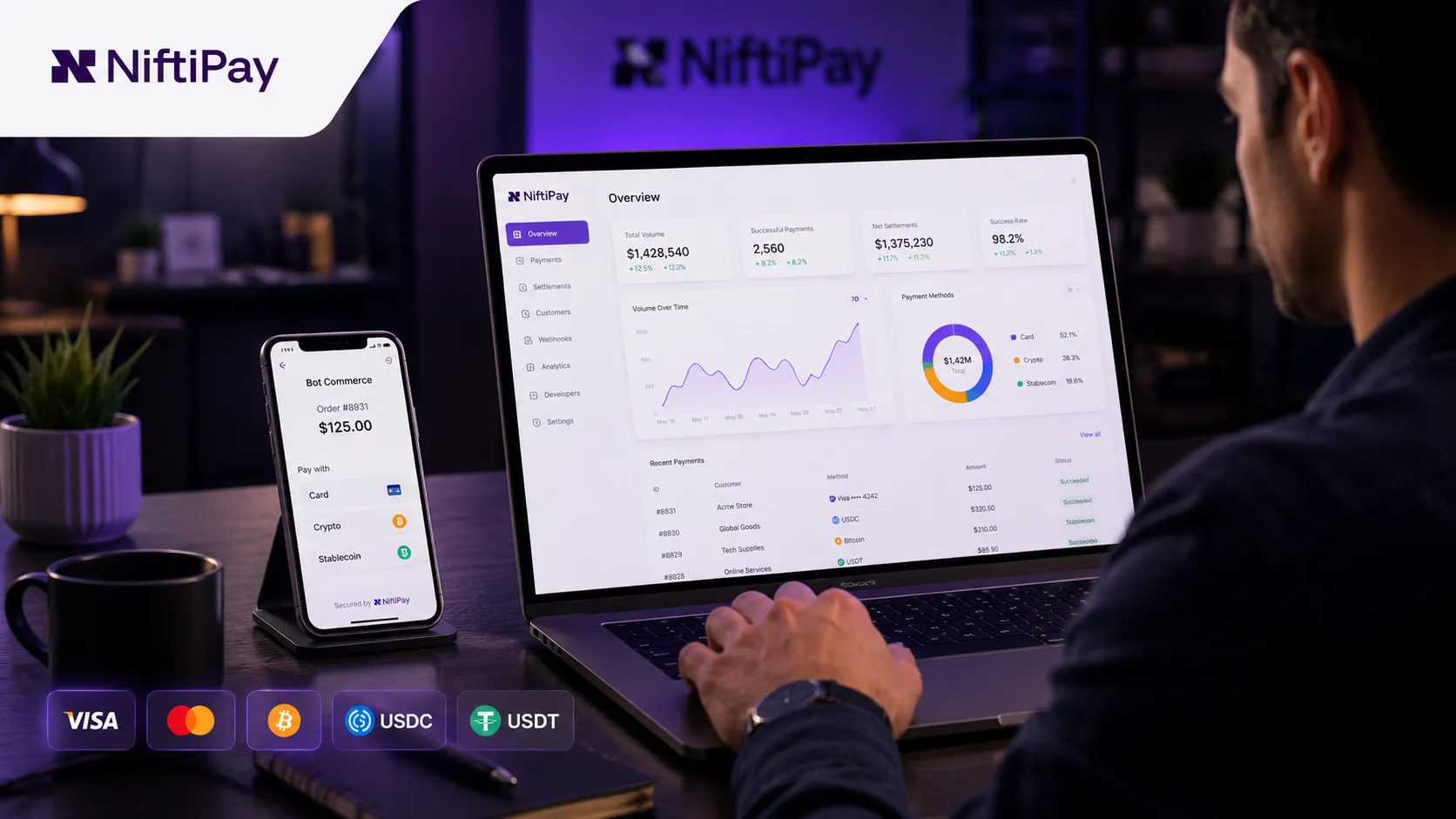
Embedded checkout compatibility for bot-based vendors
Bot flows rarely host their own card fields, and they should not. The cleaner pattern is embedded or redirect-based checkout: the bot generates a payment request, the buyer completes payment on a secure hosted page or widget, and control returns to the flow once the transaction is confirmed.
This keeps sensitive card data off the vendor’s own systems and reduces compliance scope, while still feeling native to the buyer. For technical teams, the relevant work is integration readiness — generating payment requests, handling the redirect or embed, and listening for confirmation. Our developer documentation covers how embedded checkout compatibility fits into custom flows.
Risk controls, payment status and settlement visibility
Because bot-based sales often happen in private or automated channels, the operator needs to trust the payment data, not just the conversation. Three things matter here.
Payment status. Every transaction should expose a clear state — pending, approved, failed or settled — that the bot can read programmatically. Reliable payment status reporting is what lets a flow release a product only after funds have actually cleared.
Routing and risk. Card payments should pass through fraud screening and, where required, strong customer authentication. Routing logic can direct transactions to the right rail and apply controls suited to the merchant’s risk profile, which matters for the higher-risk categories bot vendors frequently serve.
Settlement and payouts. Acceptance is only half the job. Funds have to move predictably from customer payment to merchant payout, with visibility at each step. A clear checkout to settlement flow keeps reconciliation honest and payout timing predictable, whether the underlying payment was a card, crypto or a stablecoin.
What to look for in a payment gateway for bots
When assessing a payment gateway for bot-based commerce, work through a short checklist:
- Card payment support with proper acquiring and authentication.
- Crypto and stablecoin options offered alongside cards, not bolted on.
- Embedded checkout compatibility via hosted pages, widgets or redirects.
- API or developer integration that fits custom and automated flows.
- Clear payment status exposed in a machine-readable way.
- Secure payout operations with predictable settlement timing.
- Scalable infrastructure that holds up as transaction volume grows.
- Support for complex commerce models, including high-risk and multi-party setups.
How Niftipay supports bot-based payment infrastructure
Niftipay is structured payment infrastructure for complex commerce environments, not a storefront builder. It brings cards, crypto and stablecoins into one acceptance layer, supports embedded and redirect-based checkout, and exposes payment status and settlement data so operators keep control over the money side of their flows.
For bot-based vendors and the technical teams behind them, that means one integration to maintain, consistent risk controls, and clean visibility from payment to payout — rather than stitching together separate card, crypto and stablecoin tools.
Building or scaling a bot-based sales flow? Talk to Niftipay about your payment infrastructure and how cards, crypto and stablecoins can run through a single integration.
The bot makes the sale. The gateway makes it count.
A conversation can close a deal in seconds. What happens next decides whether you keep the money: did the card clear, did the stablecoin land, will the payout arrive when you expect it? Bot-based commerce does not make those questions disappear — it just asks them faster.
So treat the payment layer as the part that should be boring in the best way: predictable acceptance across cards, crypto and stablecoins, embedded checkout that fits the flow, honest payment status, and payouts you can plan around. Get that right and the bot is free to be the clever bit, while the gateway quietly turns each message into settled revenue.
Build the flow you want — just make sure something dependable stands behind the “Pay” button.
Frequently asked questions
What is a bot payment gateway?
It is a payment layer that lets bot-based vendors accept and settle payments — cards, crypto and stablecoins — through on-demand payment requests, hosted checkout or API calls, rather than a fixed ecommerce checkout.
Does a bot payment gateway support both cards and crypto?
A capable gateway offers cards, crypto and stablecoins in one flow, with shared status reporting and settlement, so vendors do not run three separate systems.
How does checkout work in a bot-based sales flow?
The bot generates a payment request and the buyer pays on an embedded or redirect-based checkout. Once the transaction is confirmed, the status feeds back so the flow can continue.
Is bot-based commerce considered high risk?
It often falls into complex or high-risk categories, which is why routing, fraud screening and underwriting suited to the merchant’s profile matter when choosing payment infrastructure.
Does Niftipay build bots or stores?
No. Niftipay provides the payment infrastructure — acceptance, routing, risk controls and settlement — that bot-based vendors connect to. The sales flow itself stays with the merchant.