
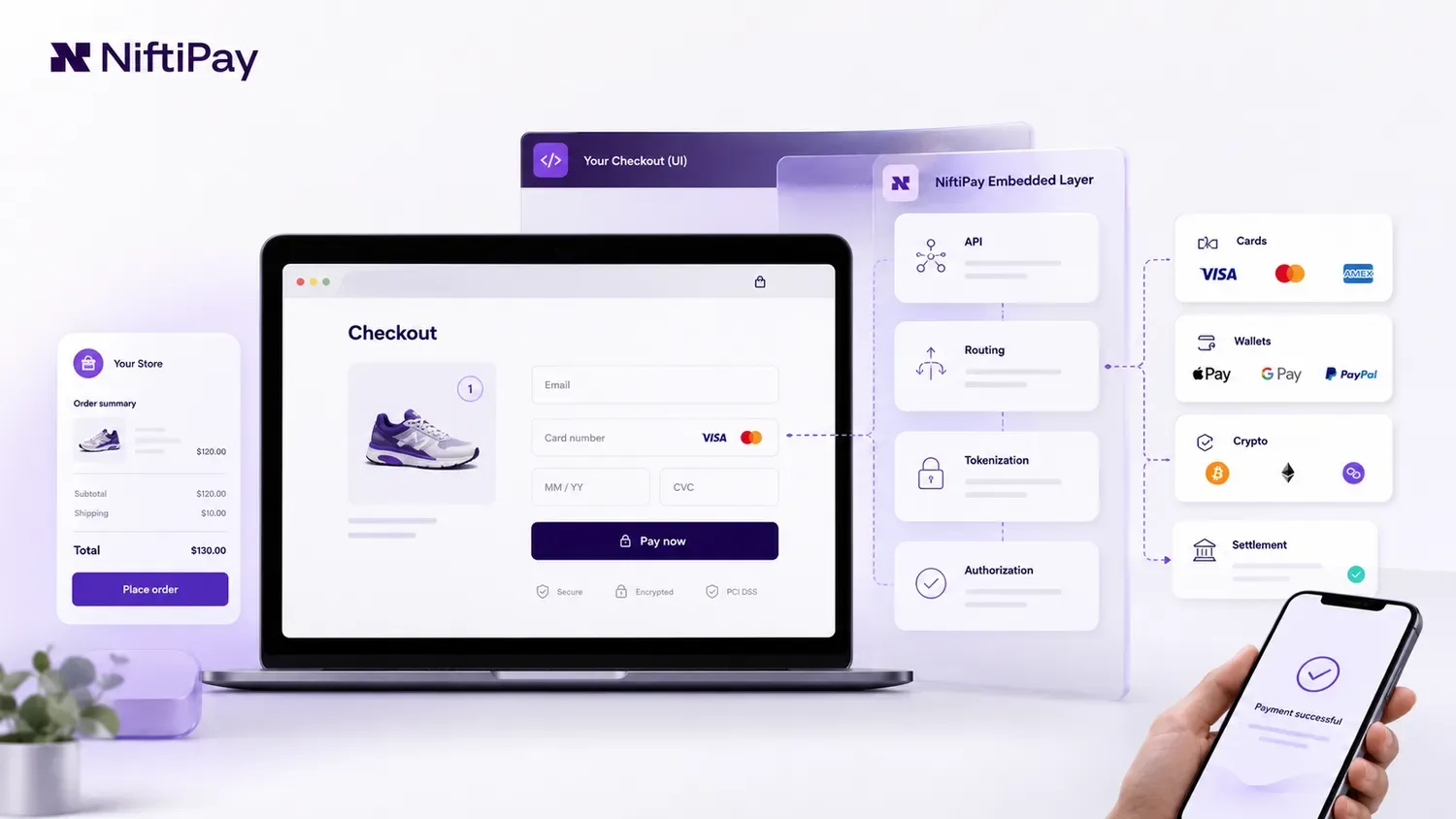
Marketplaces do not just need to accept payments. They need a payment flow that can move money between buyers, the platform and multiple vendors with control, traceability and a clear settlement structure. A crypto payment processor for marketplaces can support that flow when it is built for multi-vendor operations, not retrofitted from a single-merchant checkout. This guide explains what to look for, where crypto fits, and how to avoid the operational chaos that breaks platforms once volume grows.
What Is a Crypto Payment Processor for Marketplaces?
A crypto payment processor for marketplaces is the layer that lets a platform accept crypto and stablecoin payments from buyers, record every transaction in a way the platform can reconcile, and prepare vendor payouts at the right time and in the right asset. It sits between the buyer checkout, the marketplace ledger and the seller wallet or bank account.
The core functions are payment acceptance, transaction tracking, settlement preparation, vendor payout execution and operational visibility across all three actors: buyer, platform and seller. Without that full chain, a marketplace ends up with a checkout that works but an internal reporting layer that cannot tell finance what was paid, what was held, what was refunded and what is due to whom.
Why Are Marketplace Payments More Complex Than Standard Ecommerce Payments?
A standard ecommerce store has two parties: buyer and merchant. One charge, one settlement, one payout cycle. A marketplace has at least three: buyer, platform and one or more vendors. Sometimes the marketplace also acts as the merchant of record, which adds tax, refund liability and dispute handling on top.
That structure creates problems a single-merchant processor was never designed to solve:
- Reconciliation across hundreds or thousands of vendor sub-ledgers.
- Payout timing: instant, weekly, milestone-based or held against returns.
- Seller risk: not every vendor on a platform represents the same risk profile.
- Refunds and disputes that pull funds back from a vendor who may already be paid.
- Currency preferences: buyers in one region, vendors in another, platform in a third.
- Reporting that finance, ops and compliance can all read from the same source of truth.
If you are operating in regulated or sensitive categories, see our notes on Marketplace Payment Processing for High-Risk Platforms for the additional layers that matter before launch.
Where Crypto Marketplace Payments Can Help
Crypto is not a universal fix, but it solves real problems for marketplaces with cross-border buyers or vendors. International buyers can pay without the friction of currency conversion at their bank. Stablecoin settlement gives vendors a payout asset with predictable value compared with volatile crypto. And in categories where local card rails are slow, expensive or unsupported, crypto gives the platform an additional path rather than a single point of failure.
Crypto payments do not remove fraud, do not remove compliance obligations and do not guarantee approval from any partner. What they offer is flexibility: another rail that a marketplace can offer when the traditional one does not fit the buyer or the vendor.
For platforms weighing direct-debit-style flows against on-chain payments, our breakdown on Marketplace Merchant Direct Debit vs Crypto Payments covers when each rail makes operational sense.
The Vendor Settlement Problem: Why Payout Visibility Matters
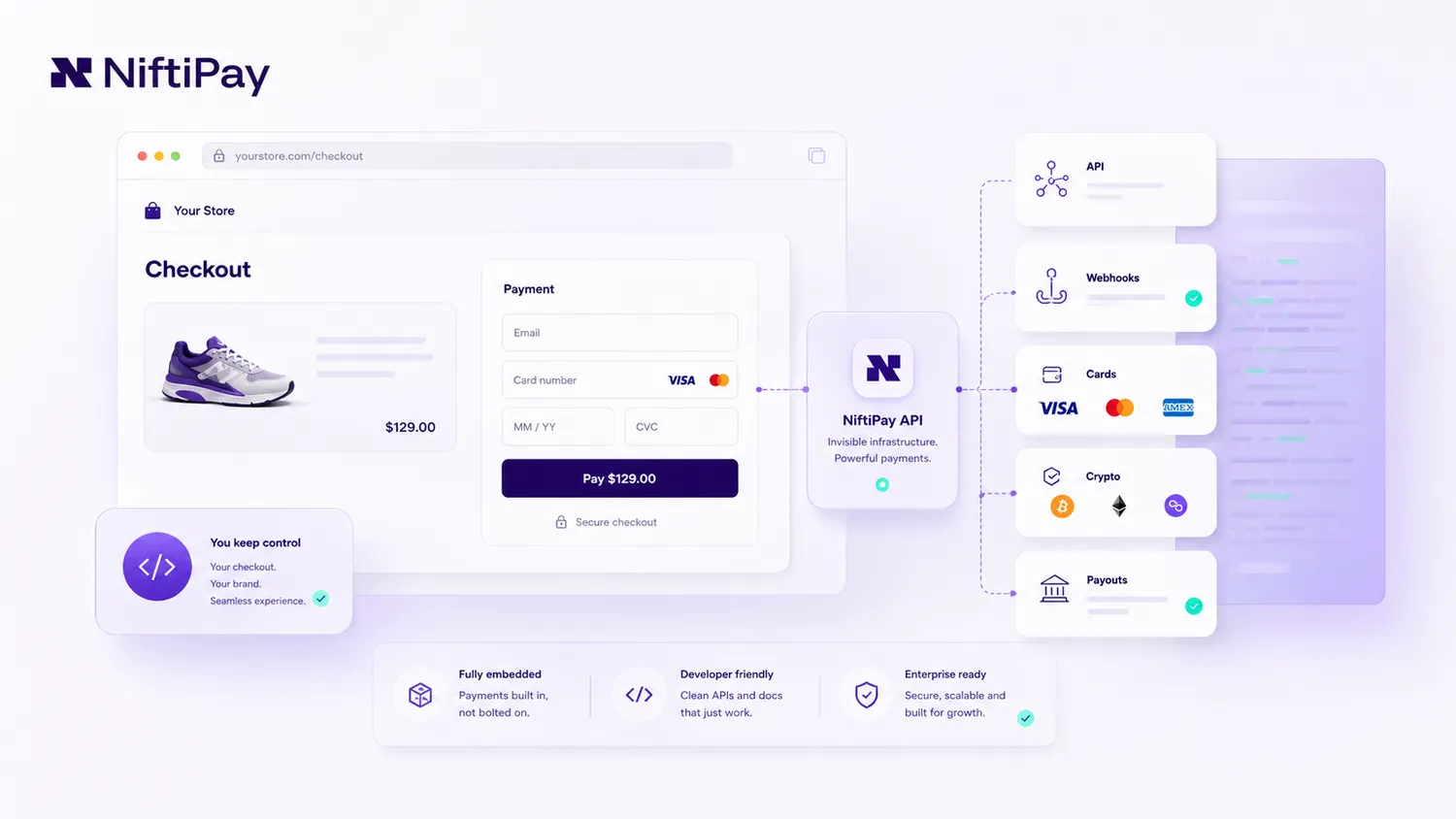
Settlement should never be a black box. When a buyer pays, the platform needs to know exactly where that money is at each step: pending, approved, failed, settled, refunded or ready for payout. Without that visibility, every vendor support ticket becomes a manual investigation, and every finance close becomes an exercise in spreadsheet archaeology.
Good vendor settlement means three things in practice:
- Every transaction has a status the platform can query in real time.
- Every vendor balance is calculated from the same ledger the platform reports from.
- Every payout is traceable from buyer charge to seller wallet, in one report.
A marketplace that cannot answer “where is my money?” to a vendor in under a minute is leaking trust on every cycle.
How Do Marketplace Payouts Crypto Work in a Multi-Vendor Flow?
The operational flow is simpler than it looks once each step is named. For a single order:
- Buyer pays in crypto or stablecoin at checkout.
- Payment is confirmed on-chain and recorded in the processor.
- The platform records the transaction against the order and the vendor.
- Seller allocation is calculated: vendor share, platform fee, taxes if applicable.
- Settlement is prepared on the platform’s payout schedule.
- Vendor payout is executed (or held for review when a flag is raised).
That last step is where most platforms get caught. Marketplace payouts crypto only work cleanly when payout rules, hold logic and reporting are part of the same system as the buyer-side acceptance. Bolting payouts onto a checkout-only processor is how reconciliation breaks.
Key Risks Marketplaces Need to Control Before Going Live
Before turning on crypto acceptance and crypto payouts, a marketplace should have an answer for each of these:
- Seller verification: who is the vendor, and what documentation supports them being on the platform.
- Refund and dispute policy: how funds flow back when an order is reversed after payout.
- Payout timing: instant, T+N, milestone, or held against return windows.
- Currency volatility: whether vendors are paid in the same crypto the buyer used or converted to stablecoin.
- Stablecoin preference: which stablecoins the platform supports for payouts and why.
- Transaction monitoring: how flagged transactions are reviewed before settlement.
- High-risk seller categories: which vendor categories require enhanced review.
- Internal reporting: which team gets which view of the data.
- Compliance documentation: which records are kept and for how long.
No payment processor removes these obligations. They sit with the platform. The right partner makes them easier to operate.
What to Look For in a Crypto Payment Processor for Marketplaces
Use the checklist below when reviewing providers. It is the same one we use when scoping integrations with platforms moving from a single-merchant setup to a multi-vendor one.
| Capability | Why it matters for marketplaces |
|---|---|
| Crypto and stablecoin support | Buyers and vendors need a stable payout asset, not just BTC or ETH. |
| Card payment compatibility | Many buyers still prefer cards; the platform should not pick one rail only. |
| Clear transaction status | Pending, approved, failed, settled, refunded — visible per order. |
| Vendor settlement visibility | Per-vendor balances, payout history, hold reasons, all in one place. |
| API or embedded integration | Marketplace logic lives in the platform, not in the processor’s UI. |
| Multi-currency buyer support | International buyers expect to pay in something they hold. |
| Payout reporting | Finance close needs a single source of truth, not exports stitched together. |
| High-risk experience | Sensitive categories need a processor that has seen them before. |
| Security controls | Wallet management, payout approvals, access scoping. |
| Support before integration | A scoping conversation before you build, not after you break. |
Cards, Crypto and Stablecoins: Why Marketplaces May Need More Than One Payment Method
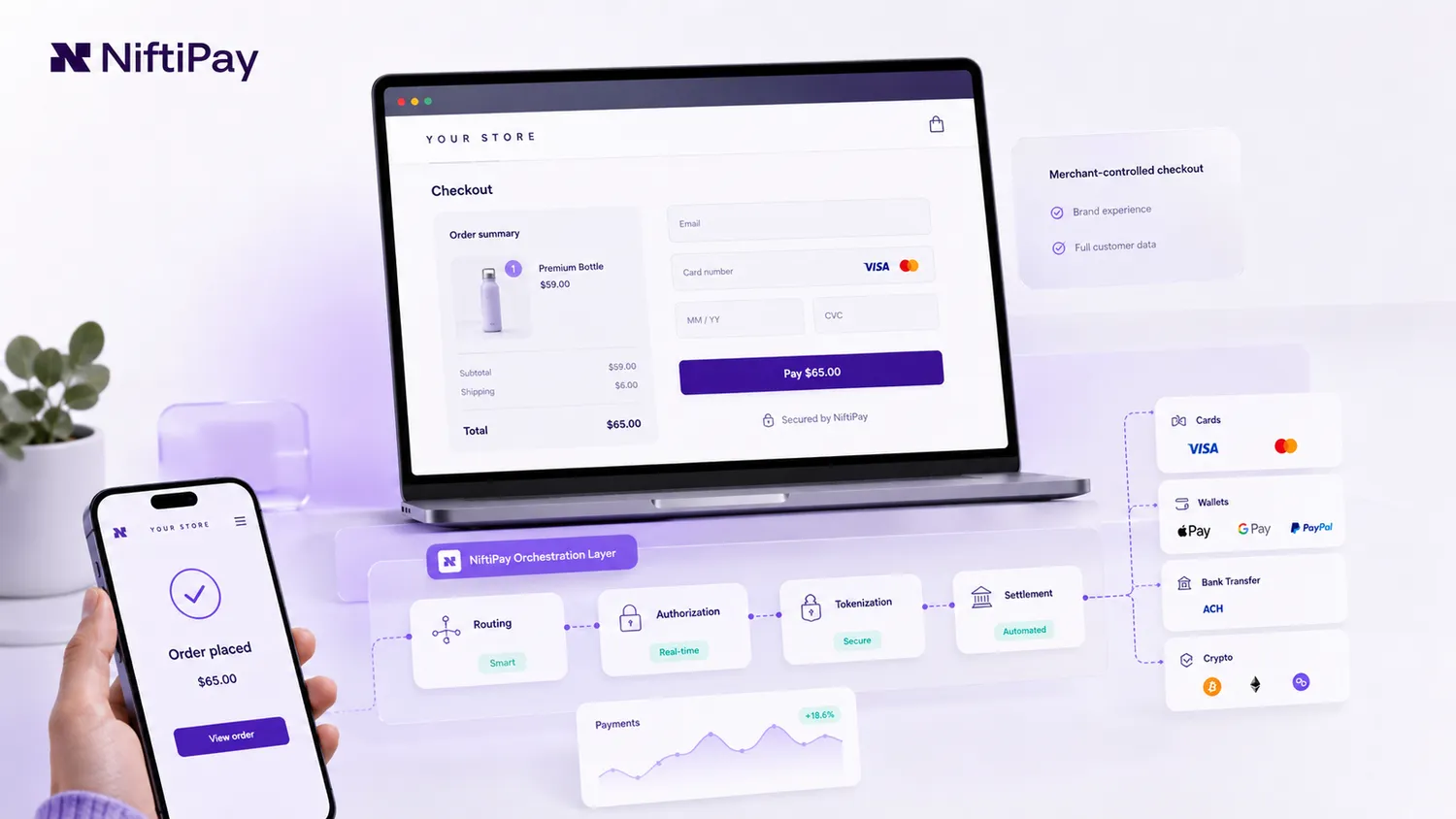
Buyers do not all want to pay the same way, and vendors do not all want to be paid the same way. A buyer in one region may default to cards; another may hold stablecoins; another may use a local payment method that does not exist anywhere else. Vendors may want fiat to a local bank, stablecoin to a custody wallet, or crypto to a self-hosted address.
An infrastructure that can mix card, crypto and stablecoin flows gives the platform optionality. That matters even more for cross-border operations, where a single rail rarely covers every market. Our overview of Cross-Border High-Risk Payments goes deeper on multi-currency and multi-rail trade-offs.
For the crypto-specific side of acceptance, the broader landscape is covered in our guide to Payment Processor for Crypto Businesses.
How Niftipay Supports Marketplace Payment Flows
Niftipay is payment infrastructure for complex commerce. For marketplaces, that means card, crypto and stablecoin acceptance through a single integration, transaction visibility that maps directly to vendor ledgers, settlement support tuned to multi-vendor schedules, and an API-first integration that lets the platform keep its own logic. The goal is operational control, not a black-box checkout.
Platforms working with us tend to share a profile: cross-border buyers, multiple vendor types, a category where the default processor cannot or will not serve them, and a finance team that wants to close the month without spreadsheet rescue work. If that sounds familiar, a scoping conversation before you build is worth more than a faster checkout.
Build the Payment Flow Before You Scale the Marketplace
The real challenge for a marketplace is not accepting crypto. It is structuring the full flow: buyer payment, platform control, vendor settlement, payout visibility and risk management as one system. Platforms that get this right at low volume have a quiet operations team at high volume. Platforms that skip it spend their growth phase fixing reconciliation instead of shipping features.
If your marketplace needs a clearer way to manage crypto payments, vendor settlement and payout visibility, Niftipay can help you review the right payment setup before integration.
FAQs
What is a crypto payment processor for marketplaces?
It is the layer that lets a platform accept crypto and stablecoin payments from buyers, track each transaction, calculate vendor allocations and execute payouts. It covers the full chain between buyer, platform and seller, not just the checkout.
How do crypto marketplace payments work?
The buyer pays in a supported crypto or stablecoin. The processor confirms the payment, the platform records the transaction against the order and vendor, settlement is calculated on the platform’s schedule, and the vendor payout is executed in the chosen asset.
Why is vendor settlement important for marketplaces?
Vendor settlement is how a marketplace keeps trust with its sellers and stays reconcilable for finance. Without clear status, balances and payout history per vendor, support tickets and month-end closes become manual investigations.
Can marketplaces use crypto payouts for sellers?
Yes, when the processor supports multi-vendor payouts and the platform has defined payout timing, hold logic, asset choice and refund handling. Stablecoins are commonly used for payouts to reduce volatility exposure for vendors.
What should platforms check before choosing a crypto payment processor?
Check crypto and stablecoin coverage, card compatibility if needed, transaction status clarity, vendor settlement visibility, API or embedded integration options, multi-currency buyer support, payout reporting, experience with high-risk categories, security controls and pre-integration support.